

Sleeping through The Infinite Now
Thirty hours, beds included, sleep treated as a form of listening

I woke up and Kali Malone was closing the night. Long notes, spaced far apart, reached me from inside a dream. I was asleep exactly where she wanted me to be. That was the moment, lying on a camping bed at the back of Kraftwerk Berlin’s main stage, when I understood what The Infinite Now was proposing: sleep was the listening, not an interruption of it.
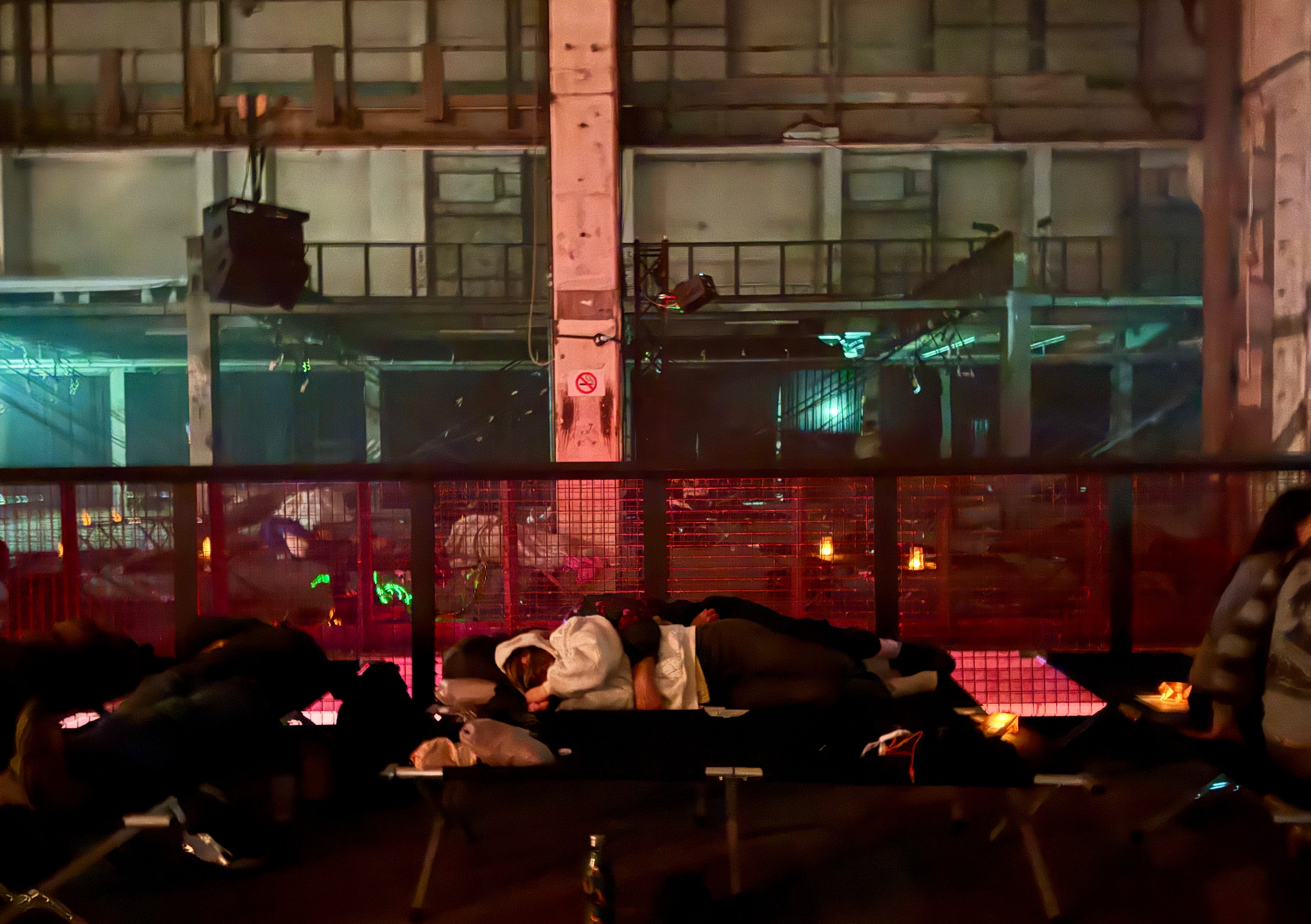
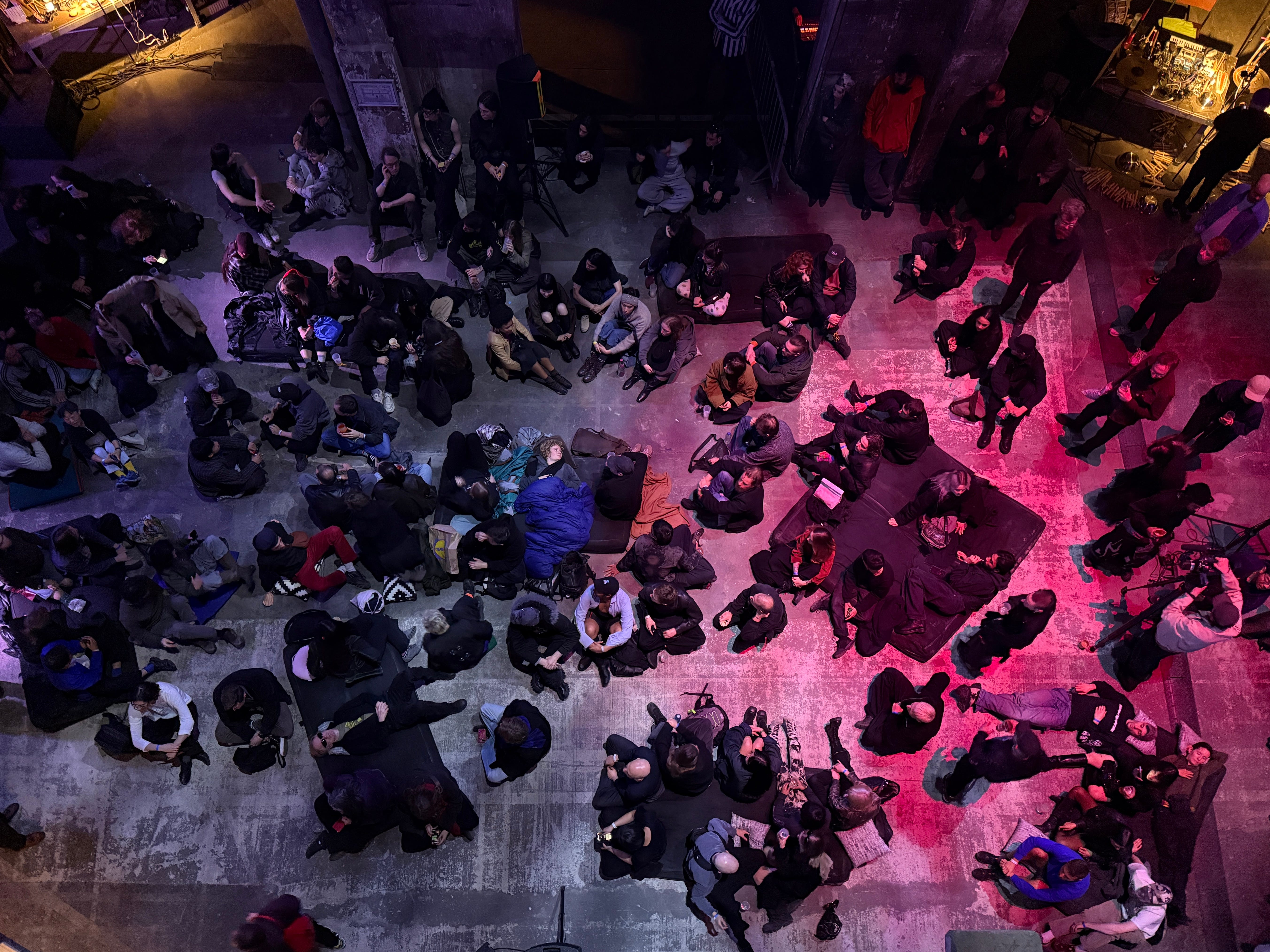
Berlin Atonal and Unsound co-programmed thirty uninterrupted hours of music. The ticket included a bed. A wristband for unlimited re-entry, a small placard with your name to reserve your spot, and a tiny bedside lamp. The beds lined the sides of the stage; one corridor was given over to hammocks, the most contested spots. The program asked for surrender.
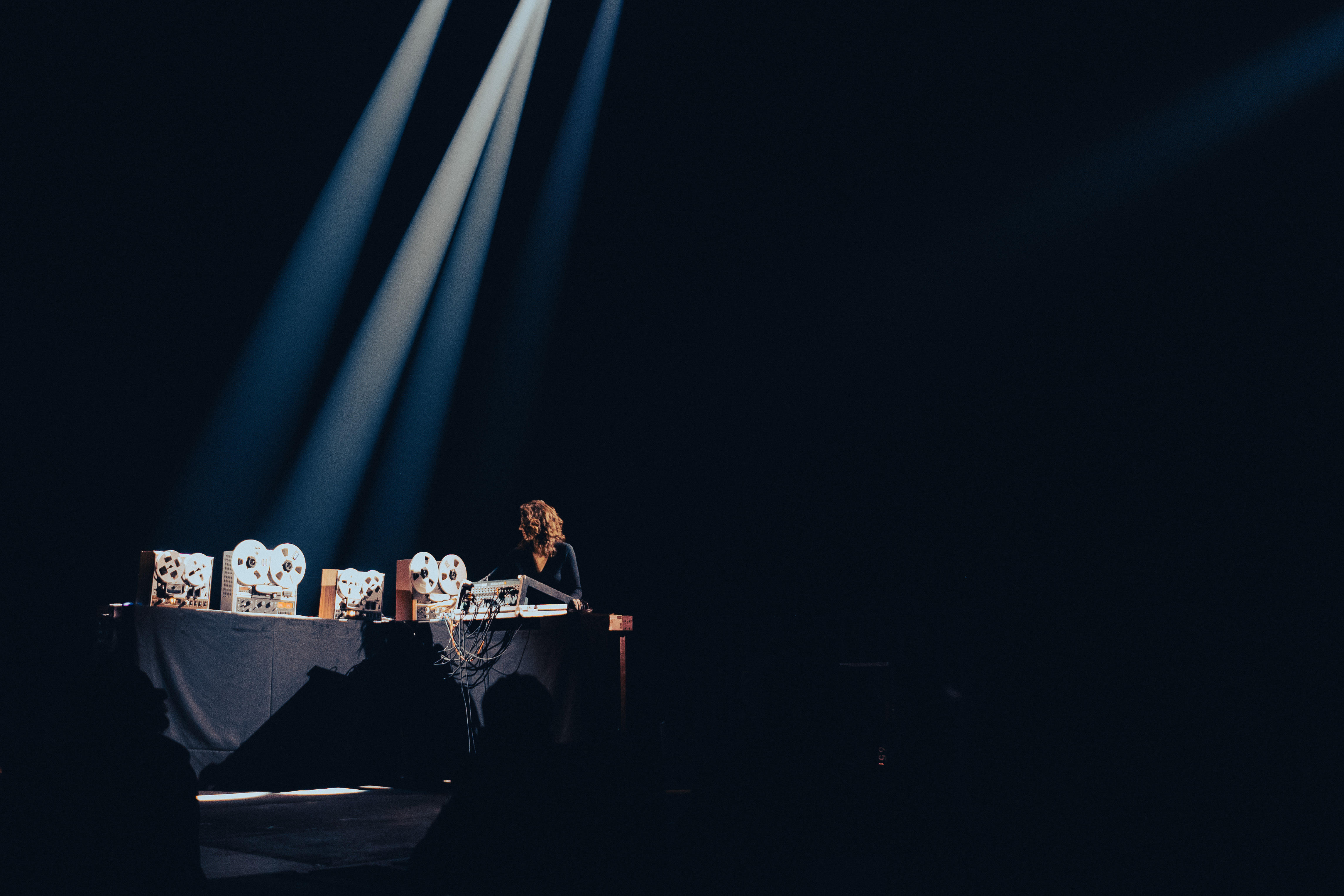
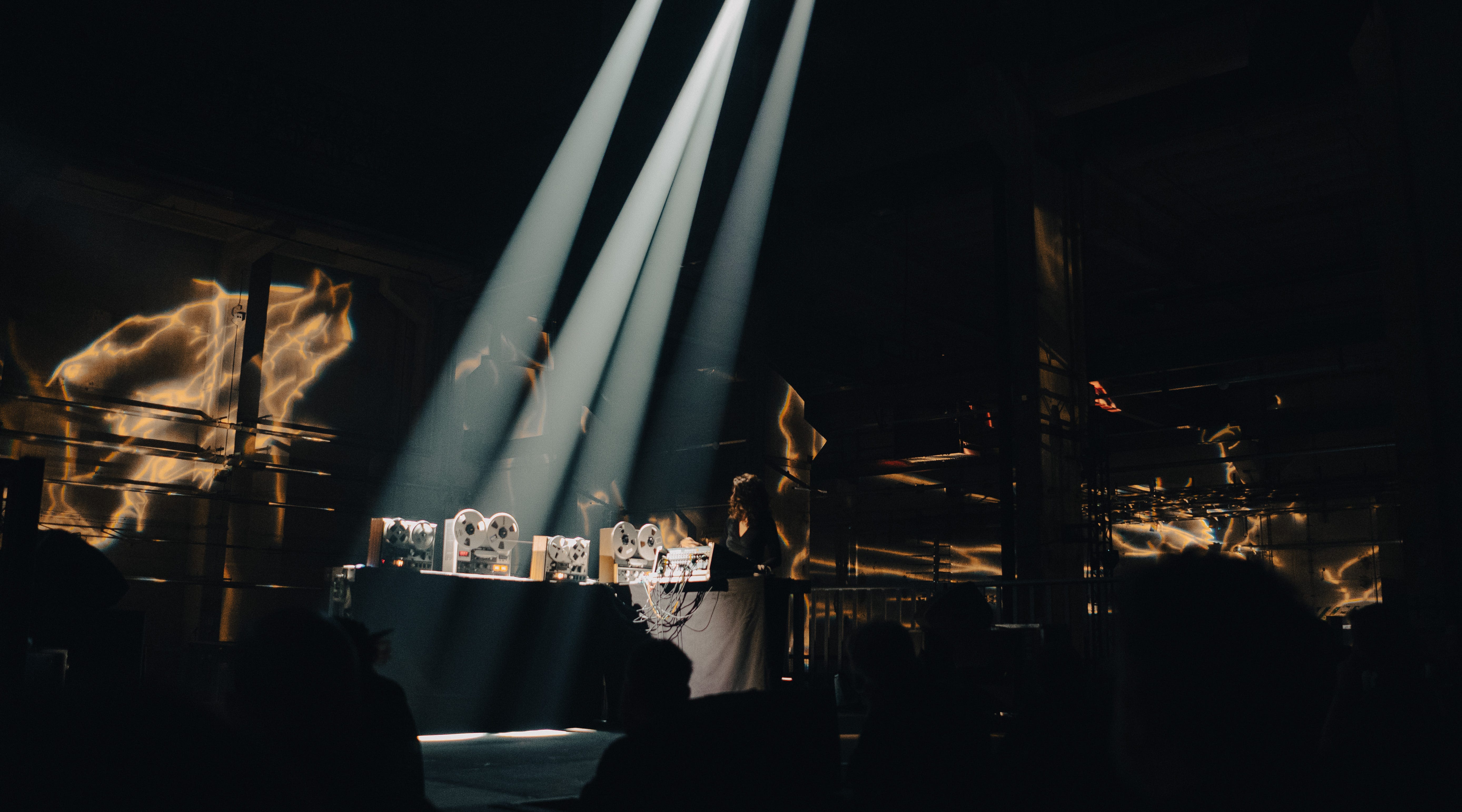
I got there around nine at night. I saw people walking in with suitcases, inflatable mattresses, and their own pillows, ready to live there for thirty hours. The place was already packed and finding a free bed wasn’t easy. Some had people curled up in duvets. I dropped my bag, a placard and a lamp on a bed facing the stage and went up front for Caterina Barbieri’s new show. She came on accompanied by Kali Malone on cello and, later, by a brass band. In an ornate, heavy-sleeved top, Barbieri looked like a gladiator. Her lyric vocals, which I hadn’t expected, dissolved into the sound textures while the lighting by MFO and Ruben Spini turned the whole space ambient, so much so that I watched half the show from behind the stage just to see the light her from every side.
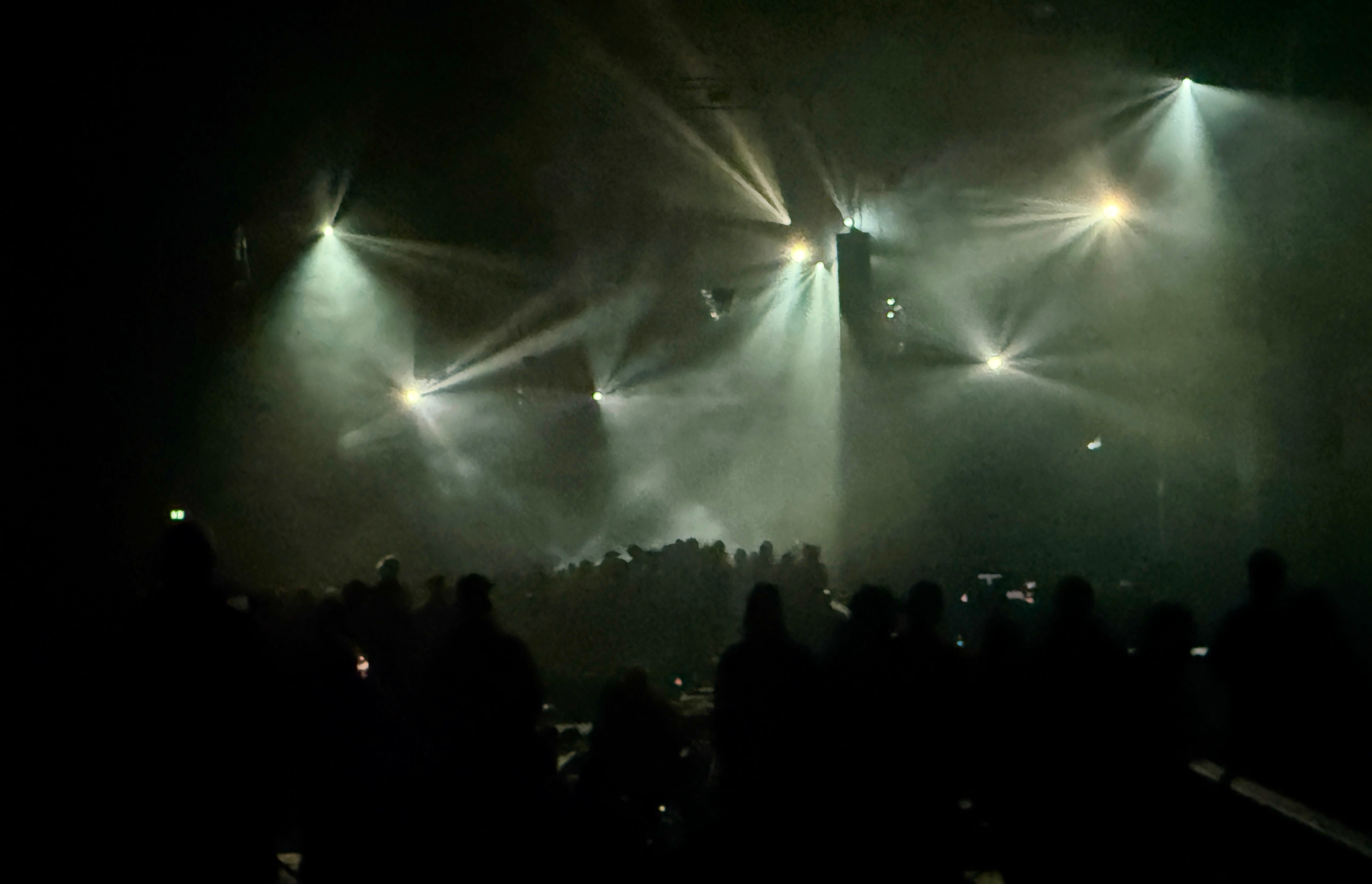
From there on, the night worked to lower the BPM. Scottish musician Brìghde Chaimbeul’s smallpipes released atmospheric drones that went straight into a body already asking for rest. Paul Jebanasam, playing “mātr”, went deeper: slow, deep drones offering a cosmic trip you could take lying down. The curators were running the night down toward sleep.
It was almost three in the morning when Lois Patiño and Xabier Erkizia’s film came onto the screen. A low blue light lit up the corridors, now empty. I dragged myself to the bed. Kraftwerk was freezing. On the bed next to mine, my husband was already deep asleep, wrapped in blankets. Around me, hundreds of people sleeping among strangers. Voices from the film cut through the silence, but it didn’t take long to give in to the hard camping bed. The sound still passed through the body.
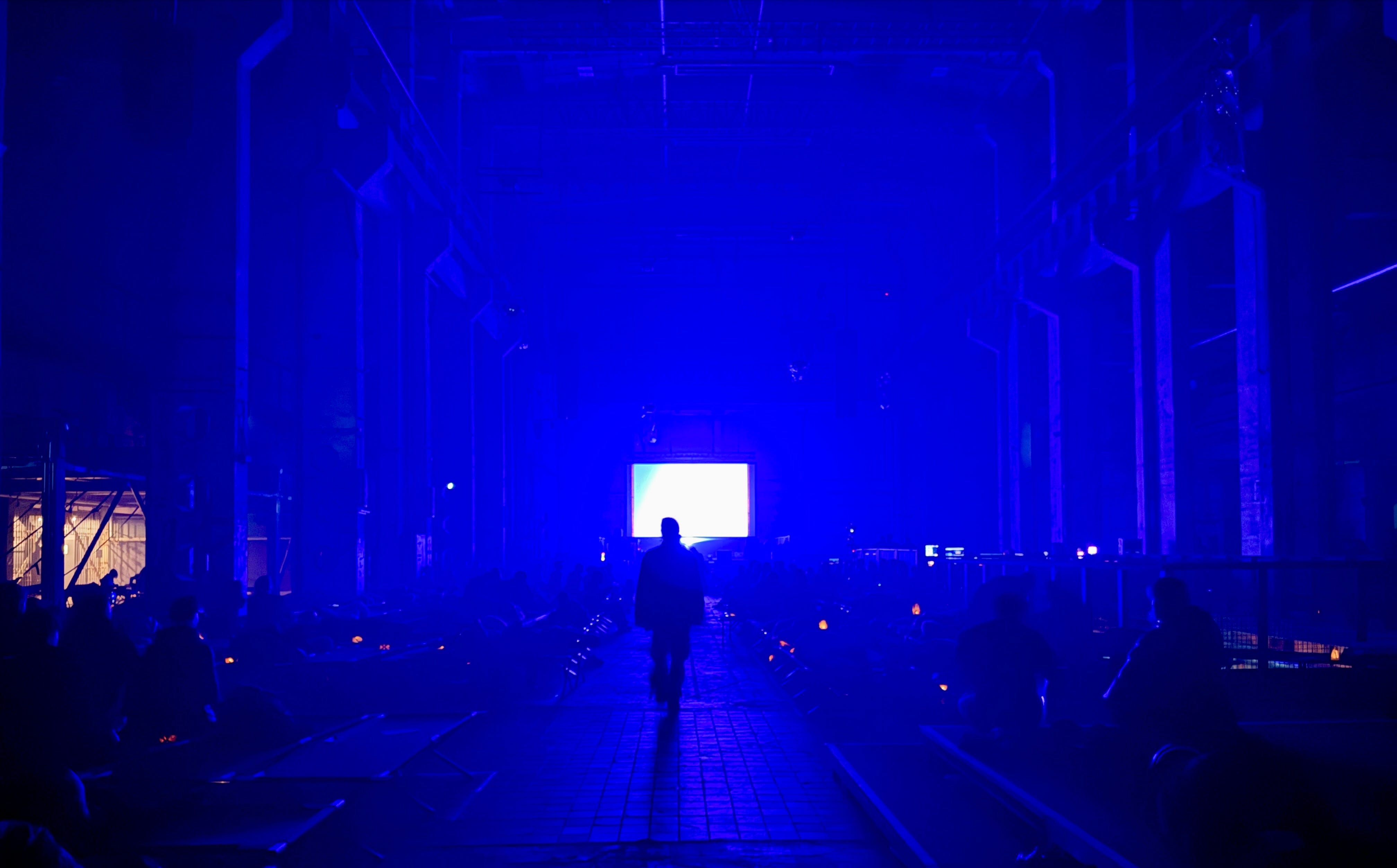
I woke up properly in the morning. Kali Malone had played while I slept. I heard something far off, a few notes, and went back under. I thought it was inside the dream. People were still lying down. Adam Wiltzie came on close to 9am, revisiting the Stars of the Lid catalog with a piece ironically titled “A Tired Reworking of Stars of the Lid For the Sleep Deprived”.
I brushed my teeth, put on sunglasses and stepped out of all that darkness. Outside, the sun was blinding. I showered at home, had lunch, crossed the city to go back into the dark. That was the strangest gesture of the weekend: leaving a sunny day in Berlin, rare enough to justify enduring the whole winter, to return to a windowless hall. However, something was happening in there that the sun couldn’t offer.
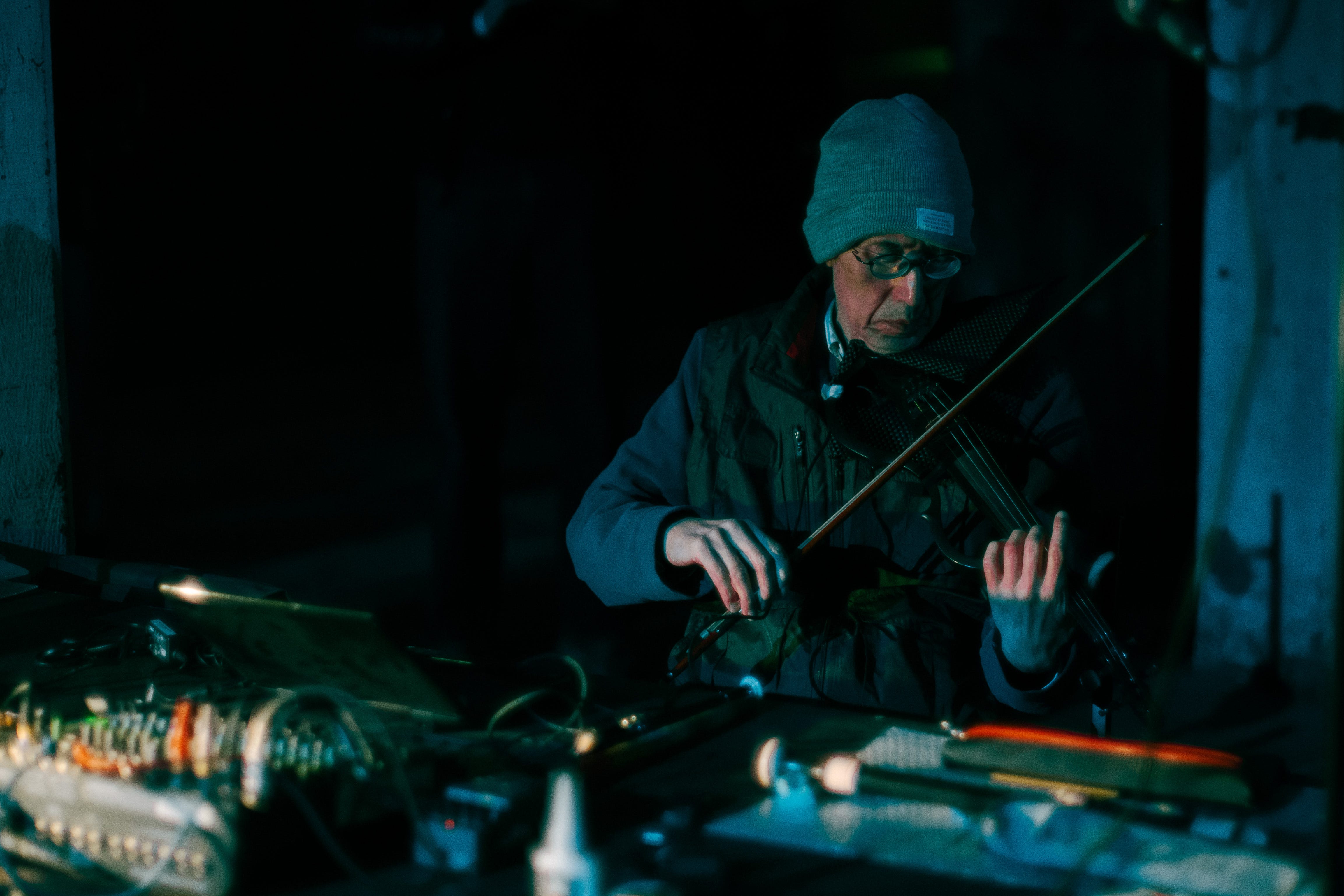
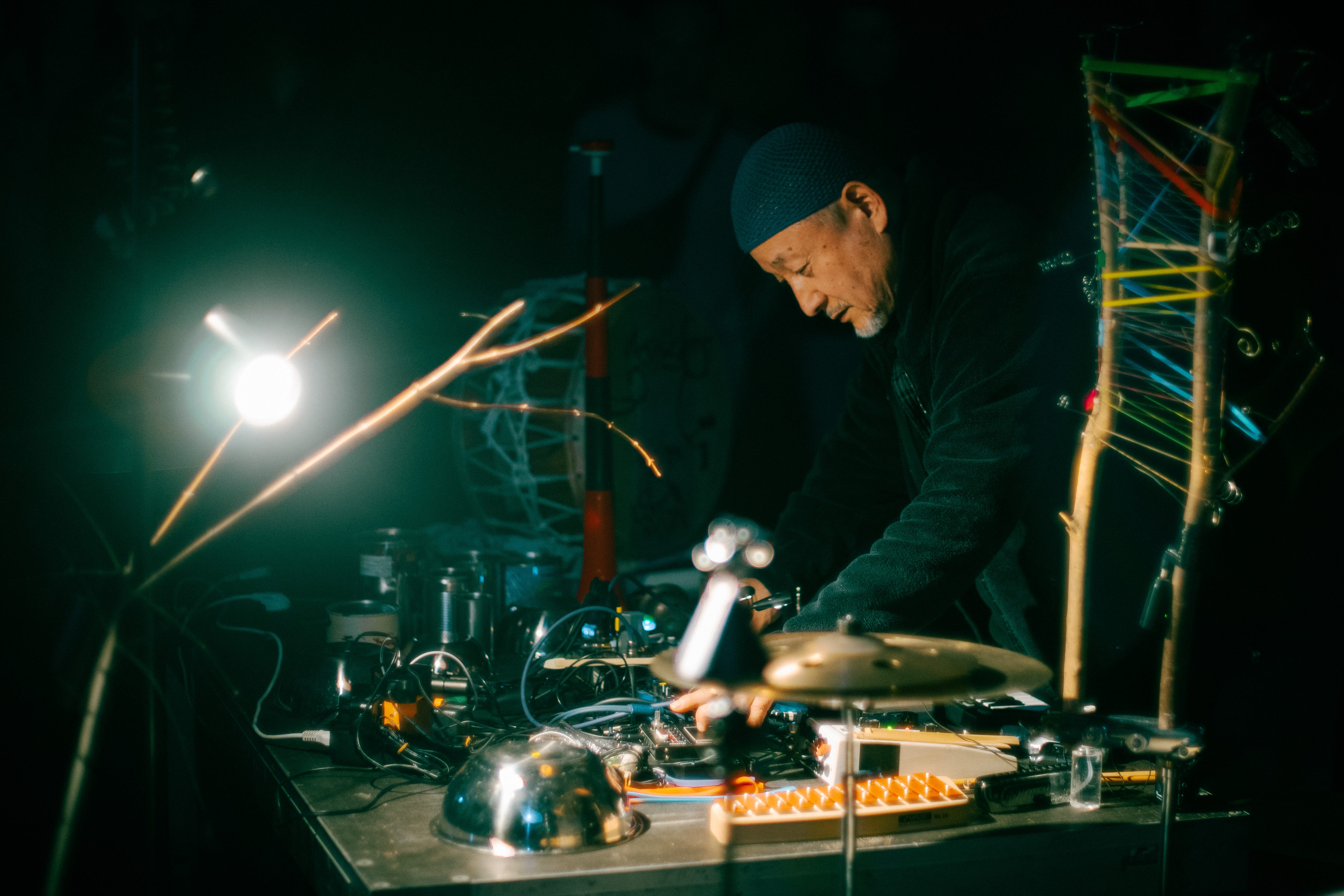
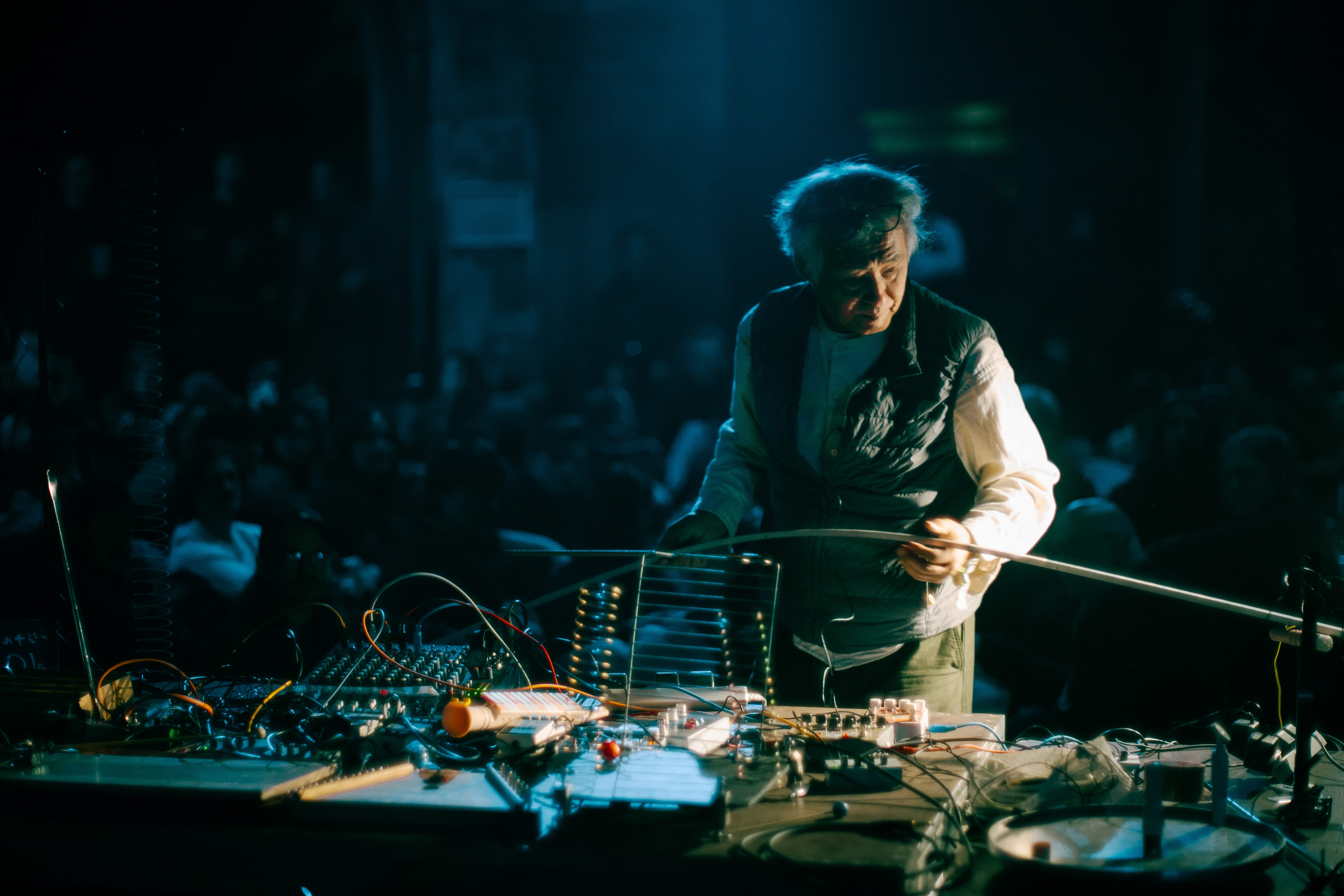
I went down to the ground floor for Marginal Consort, a Japanese experimental project started in the early ‘90s that has performed only once a year since 1997. The group spread across four stages, one in each corner of the room. It took me a while to realize it had already started. One of them was walking through the crowd playing a flute. Another tapped at small objects scattered across a table. Three hours with four older Japanese gentlemen with white hair, pulling sound from improbable places: flute, cardstock, water, violins built in unusual ways, wires, metals. They’re not making music out of objects. They’re looking for sound at its most intimate place. At some point, lying on a beanbag, I cried, maybe from everything that had piled up over the last twenty hours.
Walking between the four points of the stage, I noticed something else that the format allowed. A girl was drawing furiously in a notebook, sitting on the floor in front of one of the musicians. Out beyond the stage area, another was reading a book lying on a mattress. The night before, I had passed a guy writing pages into a notebook. A lot of people weren’t “at the show” in the face-the-stage sense. They were inside the sound doing something else: drawing, reading, writing, lying down with their eyes closed. In other corners, the opposite: a lot of people filming and photographing nonstop. The program was visually intense enough (the beautiful lighting, the scale of the space, the bodies spread across the floor, the Kraftwerk) to break the usual Berlin restraint with cameras.
The bed allowed line-up you could experience differently, not just watch. The acoustics did the rest. The music reached you with the same density from any point in the building, standing in front of the stage or wrapped in a blanket far from it.
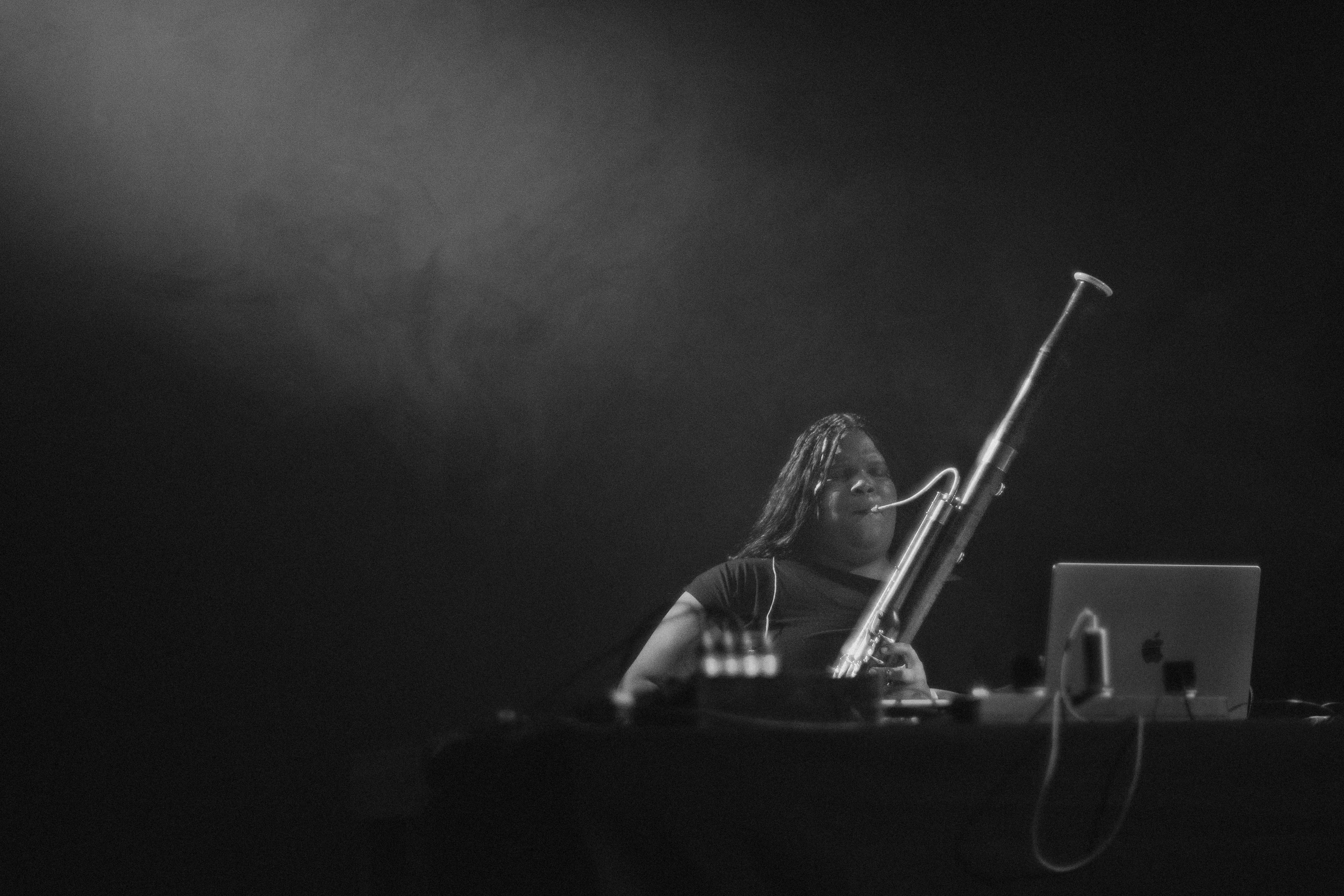
Joy Guidry came on next and gave the strongest performance of Sunday. Sitting in front of the computer, holding the bassoon, sweating and blowing with her eyes closed, almost in a trance. At some point, a speech about freedom moved through Kraftwerk. Partly jazz, gospel, electronic.
And then Keiji Haino. Seventy-five years old, straight white hair down to his waist, fringe cut straight across the forehead, wearing all black, and enormous glasses. Self-taught, active since the early 1970s, with over 80 instruments in his repertoire, he’s considered the poet of noise. He did two shows: the first, a half-hour guitar-only show. It was one of the loudest shows I’ve ever heard, loud enough to chase part of the crowd away from the front. Deafening and fascinating. Around me, Japanese fans with their eyes shut, one young guy hugging the speaker and headbanging. I have tinnitus, so I had to pull back and listen from the bar on the mezzanine. But the people who stayed walked out drenched in sound.
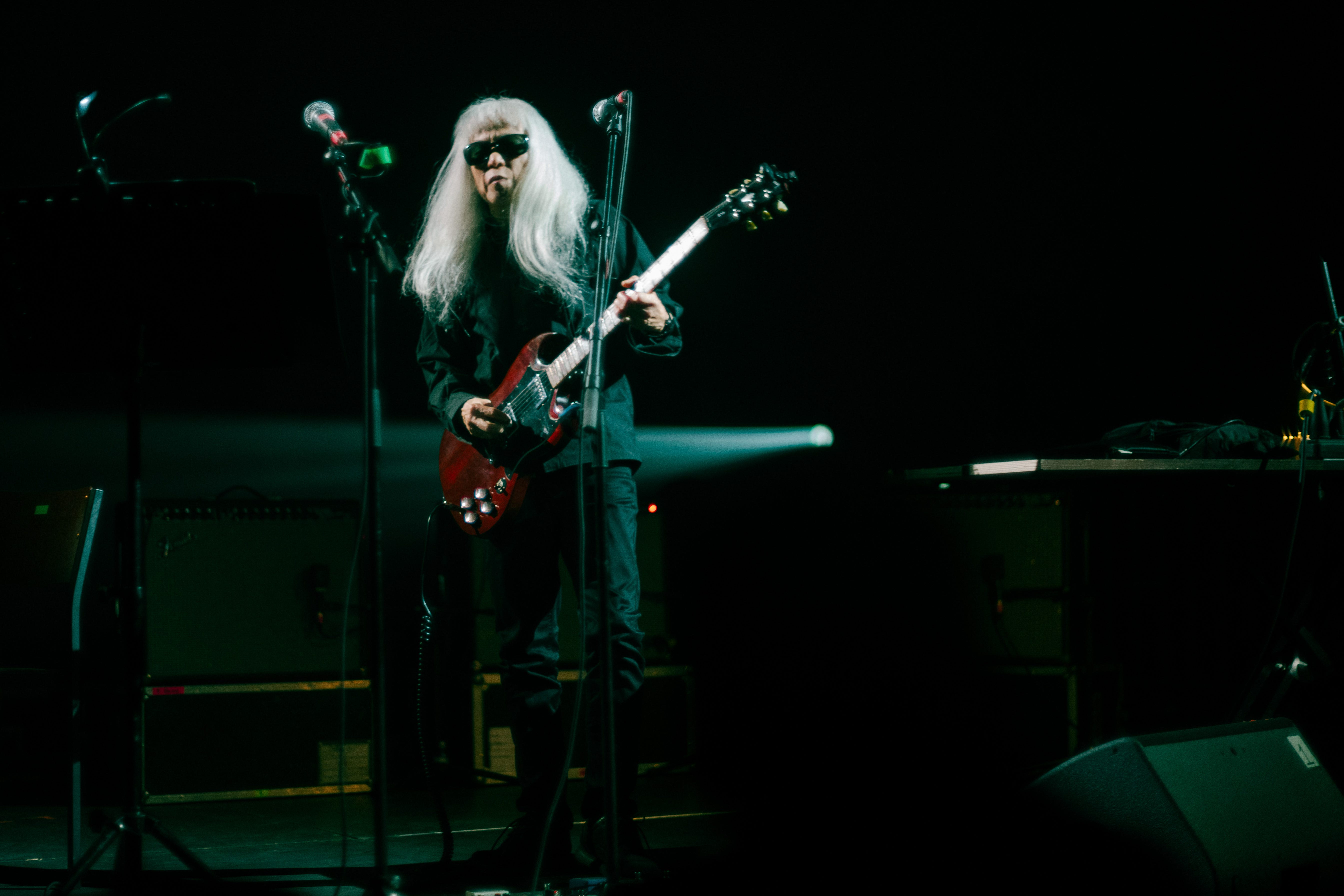
If Marginal Consort stretched time across three hours with no destination, Haino compressed it: half an hour to test what the body can take. Two Japanese answers to the same question, on the same day. One asked for surrender, the other for resistance.
I went back to stretch out on the bed and wait for Actress. He makes things easy for no one: the techno comes out angular, abstract. Far from a party experience, Actress produces a sound that disorients and rearranges how you listen. Just when you think it’s about to land and your shoulders start to roll, he breaks it and it becomes something else. A circular light seemed to pull us into a spiral. I came out unraveled.


I left before the thirty-hour closing with Terrence Dixon. The energy was already draining and I needed to keep something in reserve just to walk out of there.
The Infinite Now didn’t invent the sleep concert. Max Richter has done it; deep listening is its own long tradition. But the partnership between Atonal and Unsound, in 2026, in a windowless hall, proposing thirty hours with a bed included, takes a position worth reading. It pushes back on the attention economy and the camera-ready set. Going to a festival here wasn’t about holding out. It was the opposite: surrender.
I walked out feeling I had been through something that doesn’t fit in a review. Thirty hours to find out that what stayed with me most was the smallest moment: waking up to Kali Malone playing and realizing I was exactly where she wanted me to be. Sleeping.