

After the Solstice: Listening Back, Listening Forward
Long Read: The Season in Berlin as a Resonant Condition

This essay treats Berlin's music events of early 2026 as one continuous field of listening. It argues that these settings turn listening into a way of inhabiting time, space, and body, and proposes them as "scores" for how we might listen through summer and autumn.
As we pass the summer solstice and enter the second half of the year, Berlin’s musical calendar begins to look different. The concerts, festivals, and listening situations of the past months no longer appear only as separate events, each tied to its own date, venue, and programme. They begin to form a set of questions. What kinds of attention have we been asked to practice? What forms of listening have been proposed - not only as aesthetic experiences, but as ways of being with others? How have this year’s concerts invited us to hear the voice, the body, tuning, duration, focus, space, rest, pressure, architecture, environment, and the forms of life of sound in the city?
The solstice is a mark in the calendar that can change the conditions under which music is heard. In the Northern Hemisphere, the beginning of summer opens the season of festivals outside the city’s usual rooms, and invites us to: fields, forests, former airfields, open-air stages, long nights, and collective disorientation. Listening moves out of the concert hall and into extended situations of living. Sound is no longer encountered only from a seat, at a fixed hour, inside an architecture designed for performance. It becomes part of a multi-day ecology: something heard while walking, resting, dancing, waiting, eating, recovering, or drifting between stages.
The heat that arrives with summer is more than background atmosphere. It changes bodies. It changes rooms. It changes the way air feels between listeners and loudspeakers, between skin and vibration, between fatigue and attention. On a simple physical level, sound travels faster through warm air than through cold, and outdoor heat bends and carries it in unfamiliar ways. But there is also a more immediate, bodily sense in which heat makes listening less detached. Bodies sweat, slow down, open, resist, seek shade, gather at night, become more aware of pressure, proximity, and exhaustion. The season itself becomes a resonant condition. Listening no longer happens by facing the world, but from inside it.
This seasonal shift is one reason to return to the questions opened by MaerzMusik and by Berlin’s first-half concert life. The interviews gathered in the following weekly series can sharpen perception for what is already beginning around us: a summer of festivals, outdoor gatherings, club nights, church concerts, orchestral experiments, and sound-system environments in which listening becomes inseparable from place, body, weather, duration, and social form.
The First Half: Resonance, Duration, Habitat
The first half of 2026 has been marked by a striking return to listening as a central artistic and political problem. At CTM, performances by Sarah Davachi and Ellen Arkbro opened a field around resonance, duration, architectural sound, and finely tuned harmonic relations. Davachi’s Double Reeds, with its layered organ tones and concern for architectural immersion, treated the organ less as a historical instrument than as a threshold for overtone, space, and suspended perception. Arkbro’s work, in turn, continued this concern with tuning, harmonic stability, and the fragile perceptual shifts that occur when sound is allowed to unfold without hurry.
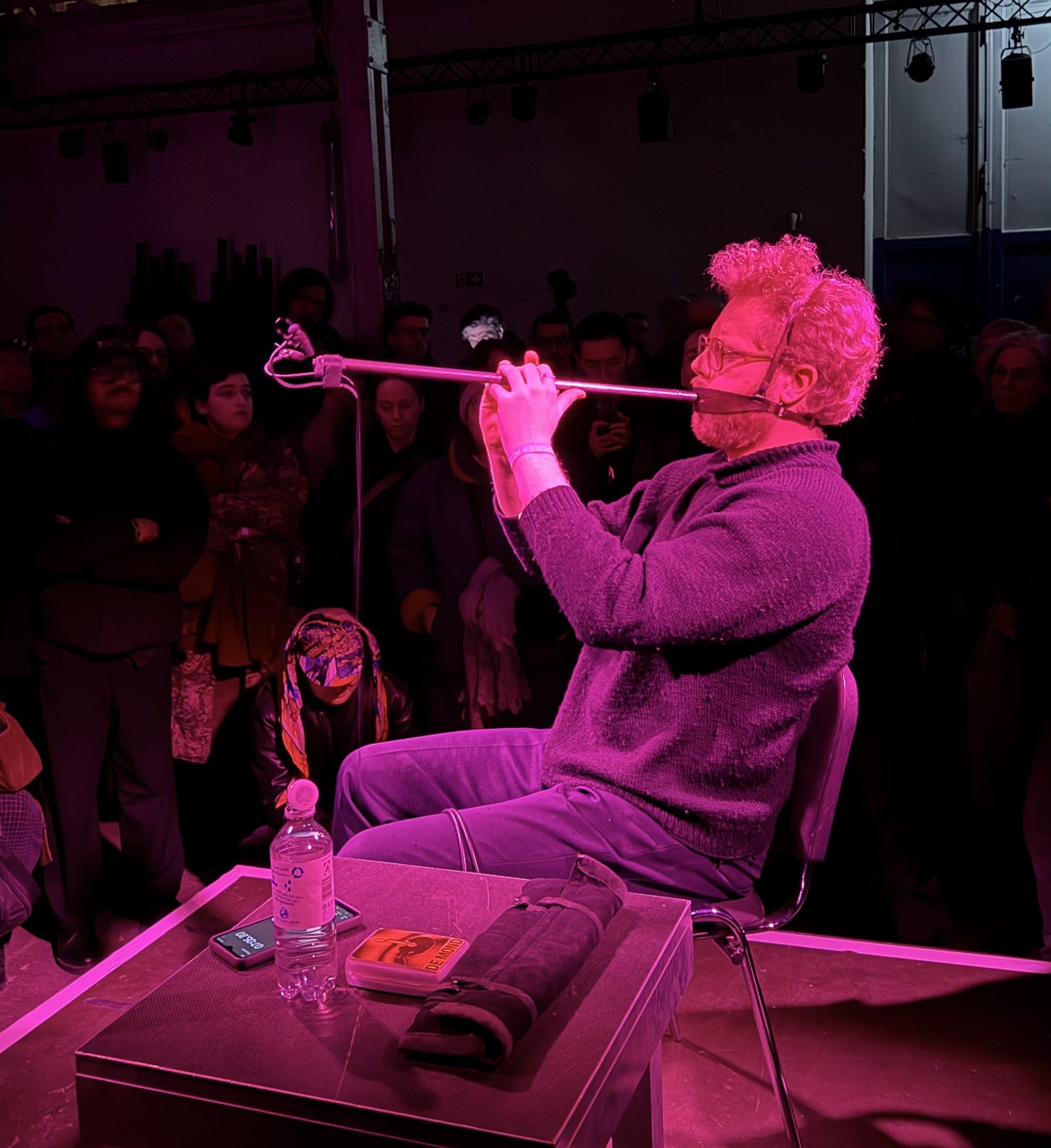
Another CTM project, Marcin Pietruszewski and Lukas De Clerck’s Oto Aulos, sharpened the same field from a different direction. Here the question was not only how sound resonates in space, but how sound is transmitted, lost, analysed, transformed, and heard again. De Clerck’s aulos practice returns to an ancient double-pipe instrument whose original sound cannot be fully recovered; Pietruszewski’s computational work then brings that unstable source into dialogue with machine listening, spatialisation, psychoacoustics, and synthetic transformation. The result is not reconstruction but resynthesis: a way of treating tradition as something active, partial, speculative, and physically unstable. Read alongside Pietruszewski’s essay, Oto Aulos becomes an important bridge between breath and algorithm, reed and loudspeaker, historical absence and present vibration, human listening and the designed ears of machines.
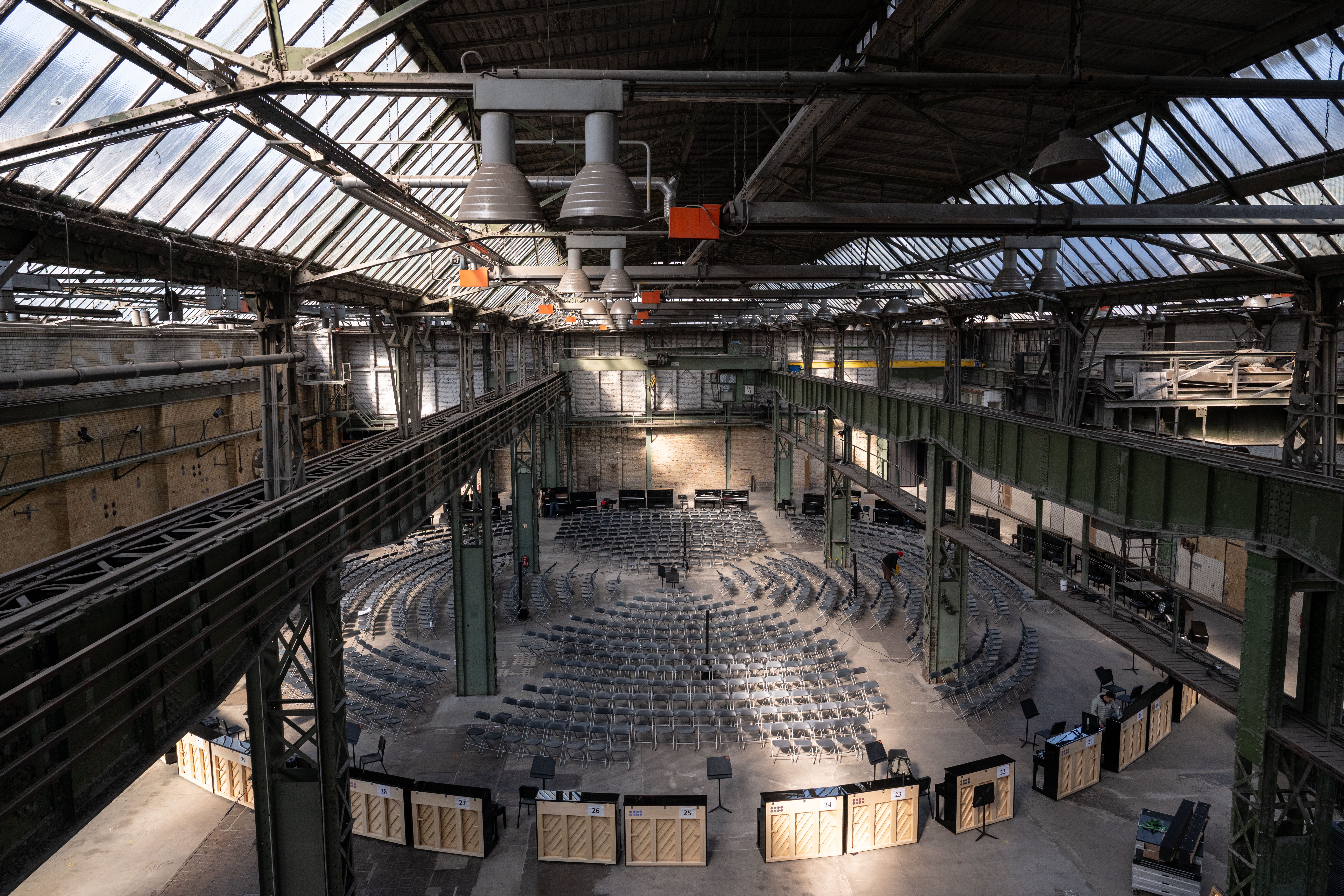
MaerzMusik then expanded that field into one of the year’s most concentrated spaces of inquiry, gathering works and conversations around microtonality, vibration, embodied listening, voice, installation, discourse, and the question of how sound can become a social practice. In May, Berlin Atonal and Unsound’s The Infinite Now stretched this concern further into a thirty-hour environment where sleep, rest, withdrawal, attention, and return became part of the listening situation itself. Kraftwerk Berlin was no longer only a venue but a habitat full of contradictions: an old powerhouse adapted to be inhabited with sound, exhausted bodies, and altered (sometimes alienated) temporal awareness.
It is worth noting that the format has a local memory. Before The Infinite Now, Berlin Atonal and MaerzMusik had developed The Long Now together — co-curated by both festivals — as one of its defining expanded formats: a thirty-hour closing project at Kraftwerk Berlin where concerts, performances, electronic live acts, installations, sleep, movement, contemplation, and social encounter became part of a single temporal environment. In The Long Now, MaerzMusik‘s identity as a “Festival for Time Issues” reached one of its clearest forms. The event asked audiences to detach from the clocked pace of the present and enter a different chronosphere, one in which waking and sleeping, listening and drifting, focused attention and bodily limit could coexist.
Seen from this perspective, The Infinite Now did not arrive in Berlin as an isolated experiment. It reframed and continued a question already embedded in the city’s recent festival history. The change from "long" to "infinite" is not merely rhetorical. It marks an evolution within a shared inquiry into time — from the collaborative Long Now toward the language of continuous presence and withdrawal that Berlin Atonal and Unsound now bring to The Infinite Now. Yet the deeper concern remains connected: how to create a space in which listening escapes the punctual logic of the concert and becomes a mode of living - possibly a politically aware one - through time.
Nature as Condition, Not Scenery
That same month, the RIAS Kammerchor’s Mit den Vögeln singen at Kraftwerk Berlin offered another important point on this landscape. A programme of birdsong repertoire, vocal imitation, choral movement, and ornithological listening placed the choir inside the former power station as if inside an artificial forest. The setting itself was crucial: concrete columns became tree trunks, industrial architecture became canopy, and the human voice moved between imitation, memory, repertoire, and environment. With conductor Justin Doyle and bird-voice specialist Dr Uwe Westphal, the concert asked how far a musical tradition of birdsong inspired classical compositions can go beyond illustration. Bird calls became a way of listening back to vocality, place, and the nonhuman sources that have long entered Western musical language.
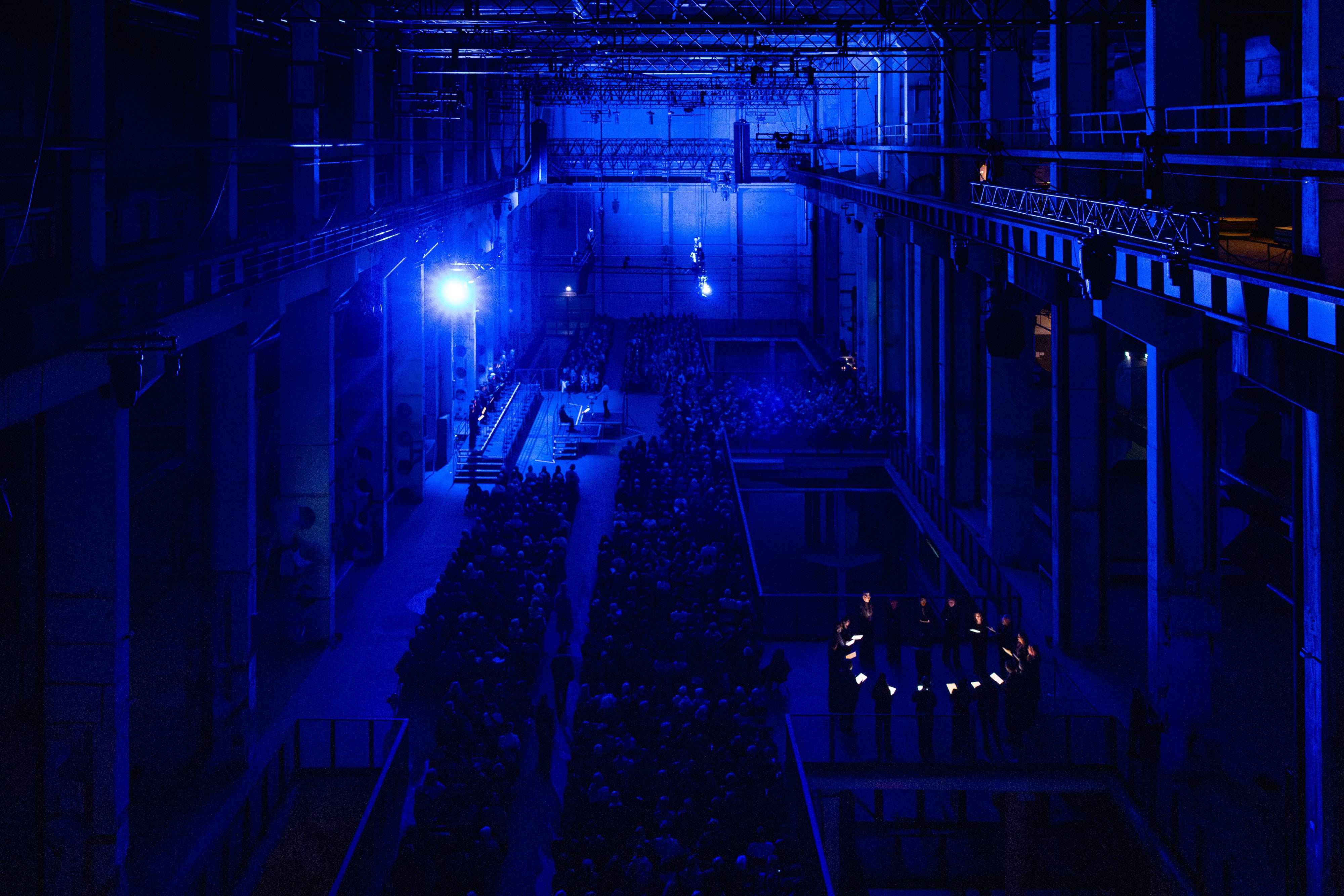
Placed beside MaerzMusik, this concert clarifies something about the year so far. Nature has not appeared only as theme or image. It has returned as condition, repertoire, source, acoustic problem, and musical enquiry. In the RIAS programme, the voice approached bird sound through choral history and imitation. In Ellen Fullman’s work, performed during MaerzMusik, the natural behaviour of strings — harmonics, vibration, space — becomes the ground from which composition emerges. In the upcoming conversation with Ángeles Rojas, wind, resonance, echo, and nonhuman time turn into ways of thinking these musical forms.
Attention, After Simone Weil
If attention is a keyword here, it should not be used too casually. In Simone Weil's philosophy, attention is not the same as concentration, effort, or self-assertion. It is closer to a disciplined form of waiting, a point of contact with Grace: a suspension of the self’s immediate demands so that something outside the self can appear more fully. It requires patience, humility, and a willingness to let the object — or the other person — arrive in its own truth.
This gives the listening practices discussed here, and the interviews that follow, a sharper philosophical and phenomenological frame. To listen deeply is not to listen harder. It is to make oneself available - to sound, to the room, to other bodies, to duration, to uncertainty - and to create relations: ultimately, to give attention and receive the Grace that comes through creation showing itself to us. Weil’s attention helps clarify why so many of the works discussed here resist speed and immediate comprehension. They ask for a different discipline: not mastery, but receptivity, and a sustained readiness to be changed by what one hears.
Looking back now, it is possible to hear the events of the first half of the year not as a unified style, but as a shared intensity. Again and again, related questions returned in different forms. How can a sound be inhabited rather than consumed? How can a listener stay with what is subtle, unstable, slow, forceful, or difficult to name? How can music reorganise attention in a city and a time shaped by distraction, crisis, and acceleration? And how can listening become more than an individual act — something social, embodied, ecological, and collective?
This is the frame through which we return to MaerzMusik.
MaerzMusik as Hinge
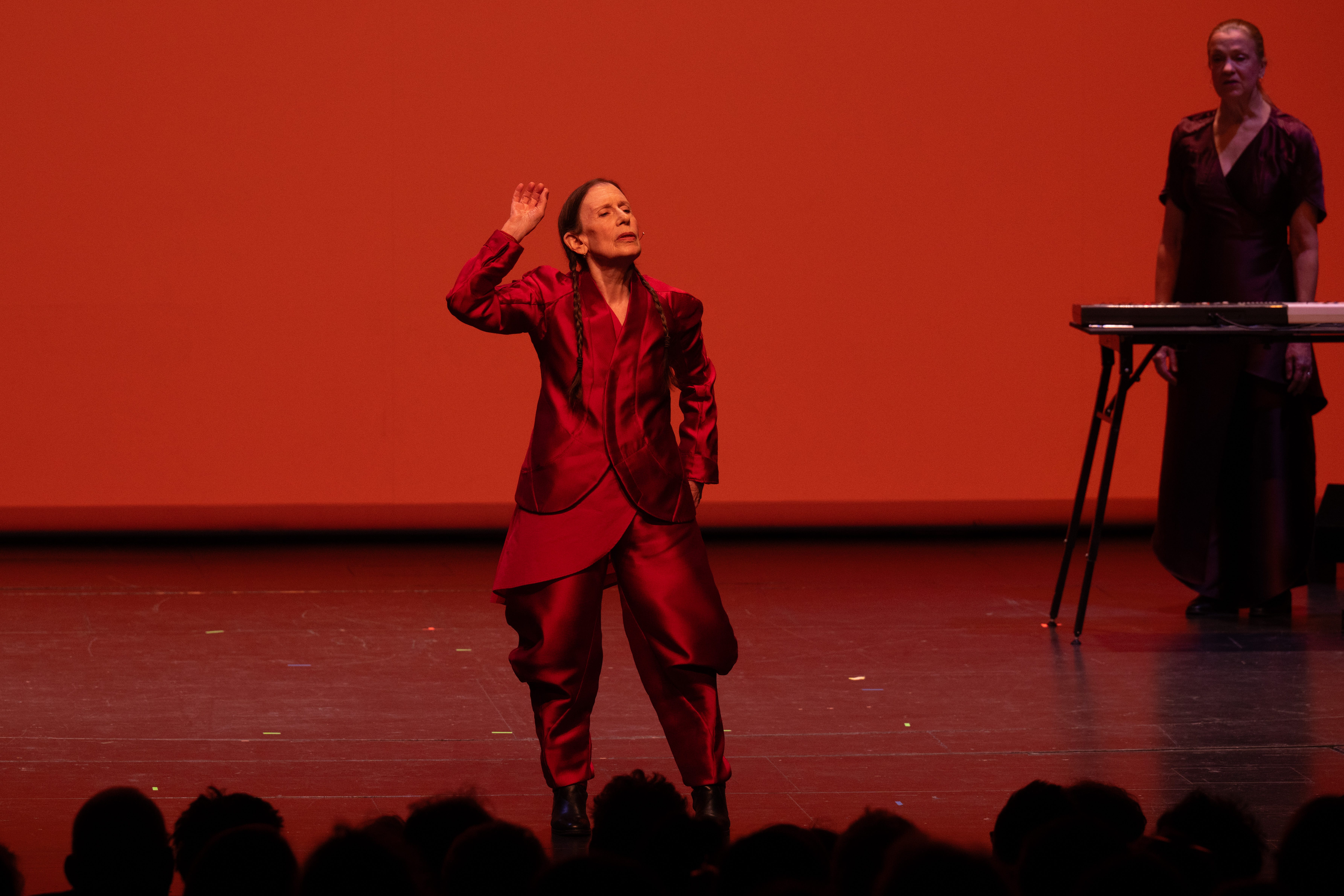
The festival was not only a sequence of concerts but a hinge: a place where different artistic lineages, generations, and practices were brought into proximity. Meredith Monk's work channeled the voice as a source of knowledge, memory, and embodied presence. Ellen Fullman’s Long String Instrument turned tuning, space, touch, and duration into a single field of perception. Catherine Lamb and Ángeles Rojas approached sustained tones, just intonation, resonance, echo, and microtonal beating as ways of thinking about coexistence. Louis Chude-Sokei, working with Jan St. Werner, brought another axis into the series: voice as theory, performance as public thought, migration as listening, and sound as a space where identity, technology, humour, and social relation can be reconfigured.
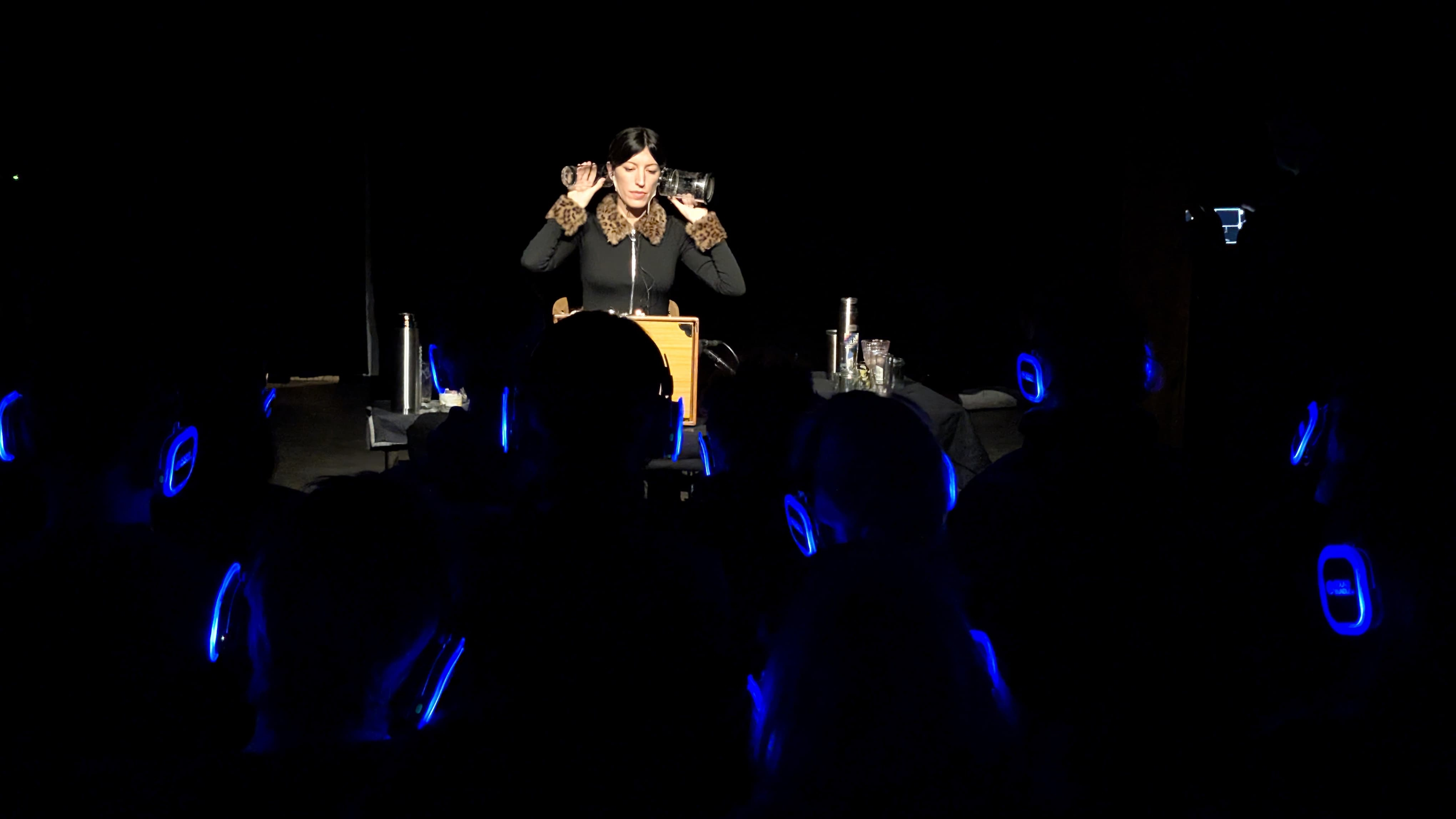
The interviews presented over the following weeks ask us to return to the festival beyond nostalgia, and to prepare ourselves for what comes next — with new ears and eyes for ideas that have already begun to resonate across Berlin’s musical life.
One of the strongest threads is the question of the source, first raised by Meredith Monk during our conversation and the festival’s press conference. For Monk, the source appears not as a fixed origin, but as something one learns to approach through quietness, focus, and trust in the work itself. She describes the need “to be quiet enough to listen to what the music stands for,” adding that “it begins in the mind–body–ear relation.” To have one's own voice, in this sense, is not simply to produce something new. It is to listen deeply enough to discover what the work is asking for. The source is not heroic individuality. It is a practice of attention.
This shifts how we understand originality. In much contemporary discourse, newness is treated as an obligation, a market pressure, a sign of relevance. Monk’s position complicates that. “As an artist you’re an explorer,” she says, asking young artists to “focus on the joy of work and discovery.” She insists on something older and deeper: the possibility that art can draw from what precedes us, what exceeds us, and what can only be heard when one becomes quiet enough to listen. Music, in this sense, is more than invention. It becomes a moment of contact - perhaps even of Grace.
Ellen Fullman approaches the source differently, but with a related intensity. Her Long String Instrument is not simply an instrument she invented and plays. It is, in her own words, a kind of personal music school: a system that has taught her how to listen, how to touch, how to wait, and how to enter the emotional life of pitch relations and musical intervals. Speaking about Hindustani vocal music, raga, and just intonation, Fullman describes a world in which tones are not abstract pitch positions but living relations. “To cry just from listening to intervals is a beautiful thing,” she tells us. One does not merely recognise an interval; one sits with it, discovers it, and allows its affective quality to emerge.
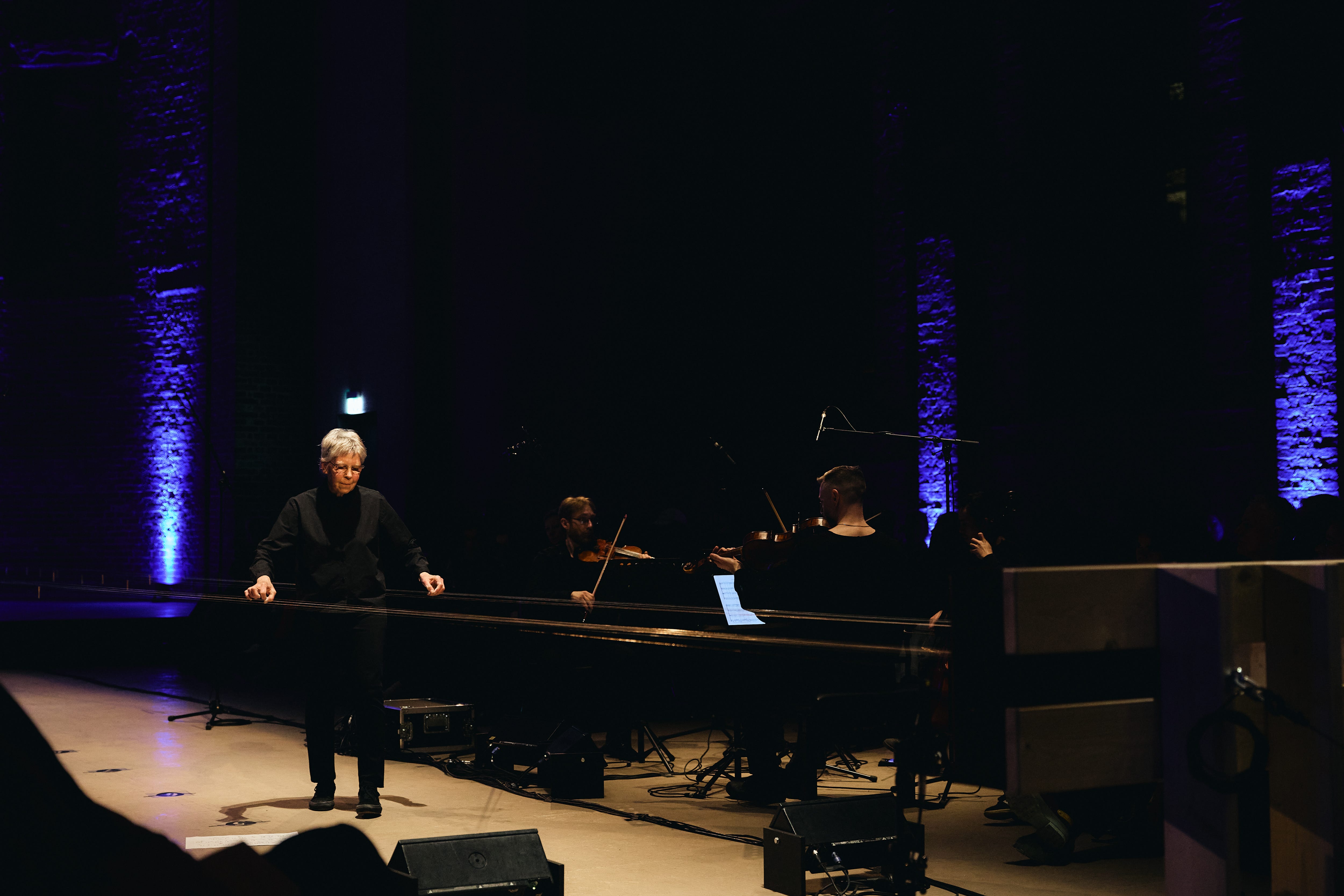
This is also why tuning, in Fullman’s work, is never a purely technical matter. Just intonation opens a slower space of perception. It allows resonance, beating, harmonics, and emotional quality to unfold at a scale of time that equal temperament tends to suppress. Her critique of Western tuning systems is therefore both sonic and historical. For Fullman, tuning carries a politics: “a history of standardisation, usefulness, and colonial abstraction, but also a possibility of refusing those structures by entering sound otherwise”.
Her work asks a deceptively simple question: what happens when composition becomes less about imposing form and more about setting conditions under which sound can reveal itself? Fullman describes this as a tendency toward situations where “the piece, the space and the instrument can show itself,” and where listeners witness something unfold. The answer is not passivity. It requires discipline, touch, attention, and an intimate relation between body, instrument, room, and listener. To witness sound unfolding is also to do something. Listening becomes an action.
Catherine Lamb's conversation extends this perspective into an ethics of sustained attention. Her music often unfolds through just intonation, vocality, harmonic relation, and durational form, but its clearest figure is the listener. For Lamb, the listener does not need to arrive with full technical knowledge. The crucial gesture is a willingness to stay with sound, to take up listening as a role, and to allow perception to become more precise over time.
Her idea of arrival becomes central. Rather than building toward climax, Lamb often works with forms that gradually open, allowing the listener to enter a harmonic world step by step. Sound becomes a sequence of thresholds - not in the dramatic sense of rupture, but in the perceptual sense of gradual disclosure. A tone appears, then another, and with each relation the space changes. Consonance and dissonance become less about tension and resolution than about motion, bloom, friction, and fusion.
The voice, for Lamb, gives direct access to this process. Singing teaches harmony through the body: through the skull, the vowel, the breath, the sensation of resonance, the felt moment when a relation locks in. This brings tuning back from abstraction into embodiment. Harmony is not only something written, calculated, or analysed. It is something negotiated between bodies.
In Ángeles Rojas’ interview, this negotiation becomes explicitly social. Her work with sustained tones, resonance, echo, microtonal beating, and slowly unfolding forms begins from acoustic phenomena, but it does not end there. What might be heard from outside as merely immersive or atmospheric is, in her account, the consequence of a more precise search: how beatings change, how resonance interacts with space, how inner melodies emerge, how a sound can blur until one no longer knows exactly who - or what - is producing it.
Through Lamb and Rojas, microtuning and deep listening can be reframed. They are not private refinements for specialists, nor simply aesthetic atmospheres. They can become models for relation. In Lamb’s work, tuning asks performers to acknowledge one another. In Rojas’ work, ensemble listening becomes a way of learning how to be together without erasing difference. Unity is not sameness. It is a shared space produced through attention to difference.
Louis Chude-Sokei enters this constellation from another angle. His work should not be folded too quickly into Afrofuturism, nor into the same post-tuning or extended-tone field as Lamb, Rojas, or Fullman — nor into Monk’s practice of the source. His strongest axis is the spoken word: voice as critical instrument, as symbolic sonic material, as public theory, as historical pressure, as technological problem, and as a site where Blackness, migration, humour, and performance meet. Chude-Sokei’s work reminds us that listening is never innocent. It is shaped by histories, bodies, technologies, institutions, and positions in the room. To listen is also to listen to how others listen - to become aware that perception itself is social. This expands our interview series’ central question. Listening is not only about attending to tones, intervals, resonance, or duration. It is also about agency, trust, collaboration, and the politics of mediation. When a voice is sampled, transformed, amplified, echoed, or electronically altered, who retains agency over it?
Across these conversations, certain words recur: source, voice, focus, resonance, microtuning, attention, embodiment, sociality, emergence. But the value of the interviews in this series lies in the fact that these words do not mean the same thing for each artist. “Source” for Monk is not the same as “source” for Fullman. “Listening” for Rojas is not the same as “listening” for Chude-Sokei. “Tuning” in Lamb’s work carries a different force than tuning in Arkbro, Fullman, Georg Friedrich Haas, or the performances still to come in Berlin. The point is not to reduce these practices to a single theme, but to hear how they resonate across their differences.
Listening Forward: Summer and Beyond
This becomes especially vivid when we look toward the second half of the year. The conversations opened by MaerzMusik are not closing. They are moving into other spaces, volumes, repertoires, and listening cultures.
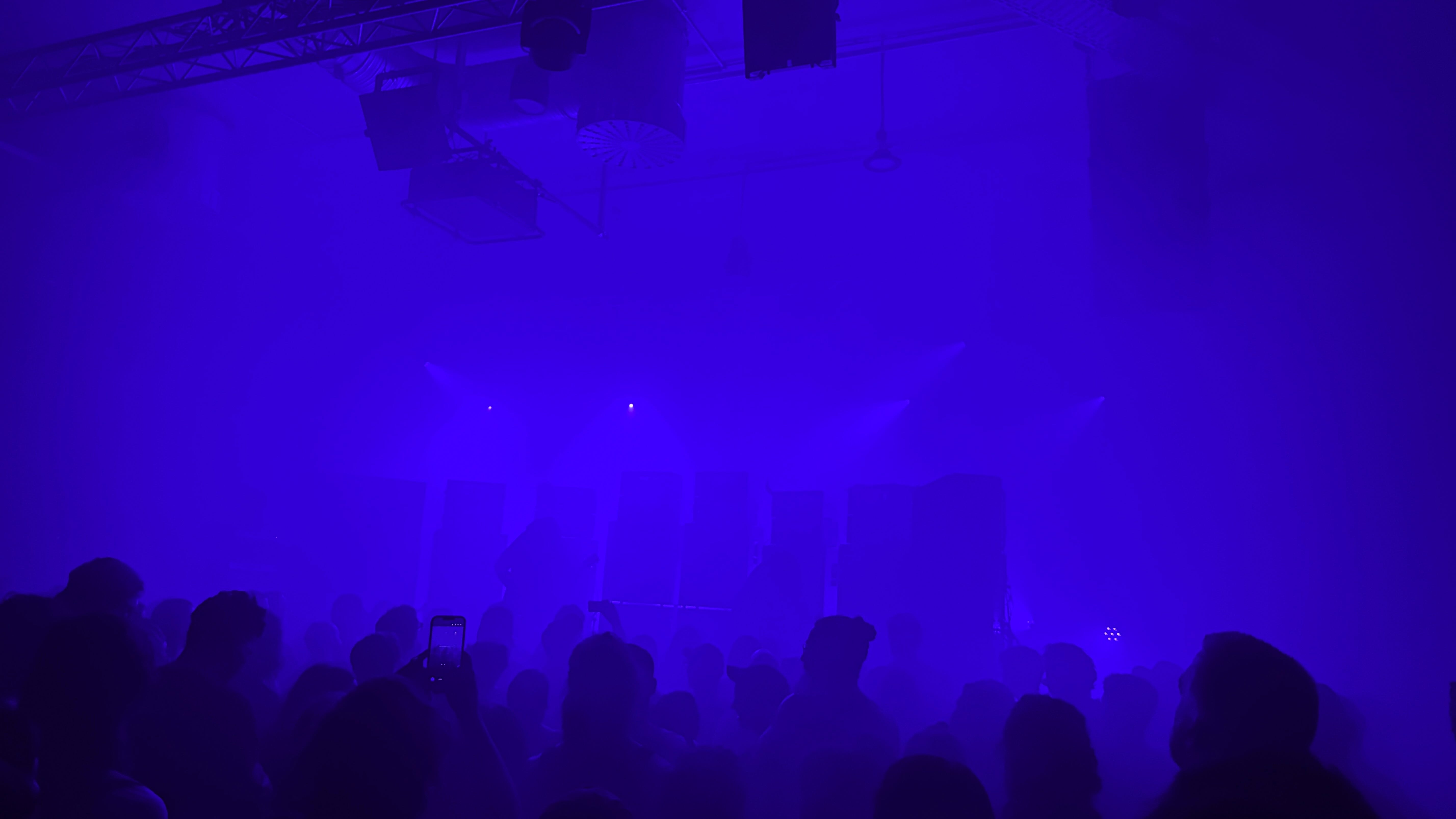
Sunn O))) returned to Berlin at silent green this month. Their work offers a very different relation to duration and resonance: not the subtle unfolding of microtonal beating, but the overwhelming physical pressure of amplifiers, low frequency, fog, air, and elemental drone. Yet this, too, belongs to the larger field of attention traced here. Sunn O))) ask the listener to encounter sound as matter, weight, environment, and ritualised bodily force. Their music does not simply fill a room; it changes the room’s atmosphere and the body’s relation to it. If Fullman teaches us to listen into the emotional grain of intervals, Sunn O))) remind us that resonance can also be tectonic, almost geological.
In October, Sarah Davachi returns to Berlin for a solo organ and ensemble concert at the Kaiser-Wilhelm-Gedächtniskirche. Davachi’s work has long explored duration, tuning, timbre, and the slow blooming of harmonic fields, and the organ brings those concerns into direct contact with architecture and liturgical space. After her CTM appearance earlier this year, her return sharpens a persistent question: how does a space change listening? In a church, tones do not simply sound and disappear. They inhabit history and specific repertoire; they hover, accumulate, bend around stone, glass, and height.
Recently, the Orchestral Sessions at Halle am Berghain offered another crucial forward point. With works by Giacinto Scelsi and Avi Caspi, conducted by Caspi himself, the programme brought microtonal orchestral thought into one of Berlin’s most charged listening architectures. Scelsi's music is central here because of its radical attention to the inner life of single tones: microtonal fluctuation, timbral transformation, vibration, and the sense that a tone is not a point but a world in itself. To hear this repertoire at Halle am Berghain, in a second edition of the Orchestral Sessions, is already to hear it through another cultural frame. The space carries the memory of Berlin’s club scene: sound-system pressure, long nights, collectivity, altered states. Orchestral forms here enter a room shaped by other listening habits.
This crossing of Western classical repertoire and club culture is one of the most interesting things happening in Berlin now. Classical and contemporary repertoire, experimental sound, club culture, durational listening, DJ culture, sound-system experience, and site-specific performance are entering into contact and putting the idea of genre under tension. A Scelsi programme at Halle am Berghain does not erase the history of the orchestra, nor does it simply “clubify” contemporary music. It produces a friction between traditions of listening: seated attention and nocturnal immersion, notation and DJing, concert discipline and bodily surrender to the night, historical repertoire and newly commissioned work. Caspi's world premiere Tacet Mare adds another layer, placing new composition beside Scelsi's search for the vast inner life of sound.
In November, Horse Lords’ Berlin concert at silent green extends the arc once again, this time through the energy of a band format. Their music has long operated at the intersection of just intonation, polyrhythm, repetition, rock instrumentation, modular synthesis, and experimental composition. What makes their presence especially relevant here is the way they make tuning and rhythmic complexity feel less like specialist discourse than collective momentum. In their work, microtonality does not necessarily suspend time; it can also move, lock, tilt, and drive. Polyrhythm and microtonality become another way of hearing relation - not only between players, but between synchronous durations, ratios, and patterns that gradually reorganise the perception of repetition. Their 2026 album Demand To Be Taken To Heaven Alive! adds to these reflections. With contributions from Nina Guo and Evelyn Saylor, it is the first Horse Lords album to feature vocals, placing the voice inside a musical language previously associated above all with instrumental pattern, tuning systems, and rhythmic architecture.
At the same time, summer pulls these questions beyond Berlin’s walls. The festivals that follow the solstice - Fusion among many others - make this especially visible. These are not concert series in the usual sense, but temporary cities of stages, camps, infrastructures, bodies, politics, intoxication, recovery, and sound. Their scale and intensity belong to a different ecology of listening: one in which music is inseparable from walking long distances between stages, hearing bass across fields before finding its source, waking up with sound already in the air, entering and leaving crowds, and sensing how a sound system reorganises night, landscape, and collective behaviour.
This is not the same kind of attention cultivated by a MaerzMusik performance, a Lamb piece, a Fullman installation, or a Scelsi orchestral programme. But it is not unrelated. Outdoor and multi-day festivals offer another way of testing the same questions under different conditions. What happens to listening when it is prolonged across days rather than concentrated into a single concert? How does perception change when sound arrives through distance, weather, sleep deprivation, social encounter, the absence of proper showers, and bodily fatigue? How does a temporary community organise itself through rhythms, stages, paths, pauses, and shared thresholds of intensity?
In the following weeks, our interview series is an invitation to share vocabularies for noticing. Lamb’s ethics of sustained listening can reframe patience and focus even in situations of distraction and excess. Rojas’ social echo can help us hear how crowds, performers, and spaces influence one another. Chude-Sokei’s idea of listening to listening becomes especially relevant in festival culture, where different publics, histories, identities, and forms of pleasure overlap without necessarily becoming transparent to one another.
In this sense, the move into summer is not a departure from this essay’s concerns. It is one of their next tests. The season opens listening outward: into fields, forests, former industrial and military sites, club architectures, churches, festivals, and temporary publics. The question starts with how to hear a concert, and moves towards how to inhabit a listening situation. How to remain attentive without becoming rigid. How to let pleasure, fatigue, intensity, and reflection coexist. How to recognise that a sound is always more than acoustic energy: it is also a relation to movement, to place, to other bodies, to memory, to infrastructure, to weather, to histories of use, and to possible forms of being together.
Taken together, these coming concerts and summer gatherings clarify why the interviews gathered here remain relevant. They prepare us for a Berlin—and a Northern Hemisphere summer—in which listening continues to move between venues, histories, and bodies.
The first months of 2026 did not answer what listening is. They offered us a set of practices. To read these interviews is therefore to listen back to listen forward. The first half of the year has passed, but the questions it staged remain active: in future concerts, in other rooms, in fields and forests, in the city’s ongoing experiments with duration, endurance, resonance, and collective presence. The interviews gathered here are not afterthoughts to the festival. They are listening scores for what comes next.